
Speakers
Keynote Speakers

Hans Bussmann
Erasmus MC – University Medical Center
Three Decades of Wearable Technology in Rehabilitation: From Measurement to Intervention And the Evolving Landscape of Measuring Physical Behaviour
Tuesday, June 23 1615-1700

Jeff Hausdorf
Gray Faculty of Medical & Health Sciences & Sagol School of Neuroscience, Tel Aviv University
Rush Alzheimer’s Disease Cente and Department of Orthopaedic Surgery, Rush University
Center for the Study of Movement, Cognition, and Mobility, Neurological Institute,
Tel Aviv Sourasky Medical Center
What We Miss When We Measure Only Physical Activity: Adding ML to Wrist-Worn Wearables Reveals the Hidden World of Real-World Gait
Tuesday, June 23 1700-1745
Wrist-worn sensors have transformed our ability to quantify physical activity at scale and now reside in millions of commercial smartwatches worldwide. They provide valuable insights into behavior and long-term activity trajectories associated with health, aging, and neurological disease. Yet physical activity represents only one half of the mobility picture. Gait itself is an equally powerful indicator, predicting falls, disability, cognitive decline, and even mortality, yet it remains largely invisible to today’s consumer wrist devices and to many research studies that focus only on physical-activity monitoring. This gap limits our understanding of real-world mobility decline and our ability to intervene effectively.
In parallel, studies using lower-back sensors have demonstrated that daily-living gait contains rich clinical information that differs markedly from supervised, lab-based assessments. Real-world gait reveals impairments related to cognitive–motor interactions, neurodegeneration, fall vulnerability, and episodic disturbances such as freezing of gait. Foundational work has produced validated digital mobility outcomes and ground-truth labels that now support a new analytic era.
This talk will briefly review this history and explore how advances in machine learning (ML)—especially deep learning, self-supervised learning, and cohort-specific fine-tuning—are beginning to bridge these parallel worlds of physical-activity monitoring and gait assessment. Extending lower-back–based gait research, ML now enables meaningful gait detection and gait-feature extraction from wrist-worn sensors, even in the presence of tremor, chorea, reduced arm swing, and other real-world challenges. This shift allows wrist devices to move beyond step counts and toward scalable estimation of gait quality, walking dynamics, and mobility resilience in daily life.
The talk will also describe wearable-based intervention studies, including ML-enabled remote and adaptive rehabilitation approaches designed to enhance daily-living mobility.
Looking ahead, synthesizing physical activity, real-world gait analytics, and wearable-delivered interventions promises a future in which a single wrist device provides continuous insight into mobility function, early decline, and dynamic treatment response—reshaping how we assess and improve mobility across aging and neurological disease.

Eddie Mitchell
Joe Gibbs Human Performance Institute
The Hans Bussmann Lecture

Stewart Trost
University of Queensland
Capturing Every Movement: Toward More Accurate and Inclusive Accelerometer Measurement for All Children
Wednesday, June 24 0830-0915
Accurate and inclusive measurement of children’s physical activity is fundamental to understanding behavioural patterns, informing intervention design, and monitoring population health. However, accelerometer-based methods used in paediatric research have evolved in a fragmented manner, resulting in substantial inconsistency in data processing and uncertainty regarding the applicability of existing techniques across diverse child populations. This presentation will provide a comprehensive overview of contemporary accelerometer data processing methods for children, highlighting why analytical approaches developed for healthy, typically developing cohorts cannot be assumed appropriate for children with disabilities or atypical movement patterns. The presentation will examine the strengths and limitations of traditional threshold-based methods, which remain widely used despite known issues with generalisability, intensity misclassification, and poor responsiveness to non-ambulant or atypical motor behaviours. Emerging machine learning approaches—designed to classify activity types and estimate energy expenditure from raw triaxial acceleration—will also be reviewed, with emphasis on their enhanced versatility, improved accuracy, and capacity to model complex or heterogeneous movement signatures. A central focus will be the question of when it is reasonable to apply data processing methods validated in typically developing children to samples that include children with disabilities, and when impairment-specific or group-personalised models are required to achieve valid and meaningful estimates. Drawing on empirical evidence and recent methodological advances, the presentation will outline key gaps in current practice and propose future research priorities needed to strengthen the validity, precision, and inclusivity of device-based measurement in paediatric populations.
The Malcolm Granat Lecture

Paul Jarle Mork
Norwegian University of Science and Technology
From Data To Discovery: Insights From Device-Measured Physical Activity And Sleep In The HUNT Study
Friday, June 26 0830-0915
The Trøndelag Health Study (HUNT), initiated in 1984-86, is a long-standing population-based cohort in Norway. In the latest wave (2017-2019), device-based measurements of physical activity and sleep were collected over up to 7 days from approximately 4,400 adolescents (56% female) and 28,000 adults (57% female) using thigh- and lower back-worn accelerometers. Machine learning models were developed and used to classify key daily postures and activities (lying, sitting, standing, slow walking [<4 km/h], moderate walking [4.1 to 5.4 km/h], brisk walking [>5.4 km/h], running, and cycling), estimate sleep duration, and detect no-wear time. By linking these data with other information obtained in HUNT (e.g., genetic data, clinical measurements, self-reported health outcomes) and national health registries (e.g., cause of death, long-term sick leave), the study provides a unique resource for examining the impact of physical activity and sleep on public health. The longitudinal data also enables investigation of determinants of physical activity and sleep. This presentation will highlight key findings and insights from the HUNT study linked to the device-based measurements of physical activity and sleep.
The Patty Freedson Lecture

Kelley Pettee Gabriel
University of Alabama at Birmingham
Movement Phenotyping at Scale: Integrating Wearable Sensors into Epidemiological Research
Thursday, June 25 0830-0915
Although considered impractical in the late 1990s, advancements in implementation and scoring methodologies, and reduced costs have made the integration of wearable sensors into large-scale epidemiological studies both feasible and imperative for advancing scientific discovery. The integration of research grade wearable sensor protocols into scientific studies was spearheaded by Dr. Patty Freedson, whose landmark work established and validated a new framework for interpreting accelerometer count data that mapped to summary estimates obtained from report based measures. This breakthrough enabled the generation of summary estimates reflecting daily, or averaged daily, movement behaviors across the entire intensity spectrum. The availability of a wider set of derived estimates not only allowed replication of findings previously based on reported accounts of moderate-to-vigorous intensity physical activity within specific domains (e.g., leisure, occupation) but also opened new avenues for investigating associations of sedentary or light-intensity behaviors with health risk factors and outcomes.
This presentation will provide an update on the evolving opportunities and persistent challenges in implementing wearable sensor protocols in large-scale epidemiological research using examples from several ongoing studies and the published literature. Key opportunities include the ability to describe and contrast complex movement phenotypes in heterogeneous population-level samples and test hypotheses to establish links with non-communicable diseases and other conditions with long prodromal periods. The availability of repeated measures provides additional opportunities for longitudinal and/or life-course analyses. Further, the collection of time-series data provides opportunities to integrate movement with other digital health metrics of physiological response collected by wearable sensors, such as continuous glucose monitoring. Despite advances, persistent challenges remain. Wearable sensor protocols are typically included in large epidemiological studies as part of a separately funded ancillary study and are subsequently presented to participants as voluntary protocols, leading to missing data over time and potentially biased samples. Other challenges include logistical complexities based on parent study design, need to conduct calibration studies and/or complete data reprocessing steps to leverage ongoing technological and methodological advancements, or conduct pooled studies to estimate associations with clinical events or outcomes.
The David Bassett Lecture
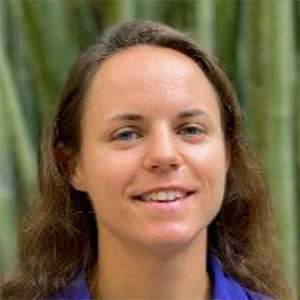
Lindsay Toth
University of North Florida
Steps, Science, and a Little Fun: The David R. Bassett Lecture
Thursday, June 25 1645-1700
To date, many devices and variables have been developed to describe physical activity. Still, one that has stood the test of time across monitors, wear locations, and algorithms is steps per day. In honor of David R. Bassett’s contributions to the science of step counting (and more), this lecture will provide a historical-to-modern overview of step-counting devices and current evidence on daily steps from measurement, epidemiological, and translational perspectives. The talk will begin with a brief overview of step counting, from early pedometers to modern wearables, highlighting progress in step-detection accuracy and challenges in step estimation across devices, including algorithmic differences, wear-location effects, slow-walking detection, and more. These measurement considerations will be linked to ongoing efforts to harmonize, improve reproducibility, and promote transparent reporting in wearable-based research. The lecture will summarize recent epidemiological evidence linking steps with key health outcomes, including all-cause mortality, cardiovascular disease, and aging. Daily step distributions, age-specific dose–response patterns, and contemporary benchmarks for interpreting steps per day will be discussed. Dr. Bassett’s contributions across each of these areas, along with his other influential work in physical activity measurement, will also be highlighted.
EARLY CAREER RESEARCHER INVITED SPEAKERS

Silvia Del Din
Newcastle University
Every step counts: a journey toward validating digital mobility outcomes in the real world
Thursday, June 25 1130-1215
Have you ever thought about how you walk? Mobility—and specifically gait—is recognised as the “sixth vital sign,” offering a sensitive biomarker of overall health and brain function. Changes in mobility can signal early risk, support diagnosis, and track disease progression across numerous conditions, including Parkinson’s disease. Traditionally, quantitative gait analysis has been confined to specialised laboratory environments, capturing only brief snapshots of walking performance. Yet assessing mobility in the home and community—the “real world”—provides a far richer and more ecologically valid picture of how people truly move through daily life.
Digital health technologies, such as wearable devices including inertial measurement units, now enable continuous, objective monitoring of real-world mobility. These devices can quantify walking behaviour, capture clinically relevant digital mobility outcomes (e.g., step count, gait speed), and support remote assessment at scale. However, reliable use of these measures requires rigorous technical validation and robust data standards.
This talk will outline why monitoring mobility in daily life matters and how high-quality digital outcomes can be generated. Key findings from the Mobilise-D Technical Validation Study will be presented. This includes the development and validation of a framework for algorithm validation, benchmarking algorithms performance across diverse conditions, and establishing transparent, reproducible pipelines to ensure accuracy in real-world environments. The work on data harmonisation and standardisation will be discussed—critical steps for comparability across devices, studies, and clinical applications. Throughout the talk, applications from Parkinson’s disease research will highlight both the potential and the challenges of using validated digital mobility outcomes to transform clinical trials and personalised care.

Caitlin Bailey
National Institutes of Health/National Cancer Institute
Leveraging Consumer Wearables for Population Health Research: Insights from the All of Us Research Program
Friday, June 26 0930-1015
The continued widespread adoption of consumer wearables has created an exciting new frontier for measuring real-world movement and sleep behaviors on an unprecedented scale. Consumer wellness trackers now generate continuous streams of data that were once burdensome and expensive, if not impossible, to collect. This creates an opportunity to observe behavior in context, over time, and across diverse groups in ways that traditional survey tools or expensive research grade devices cannot match.
Yet this rapid technological growth also brings a set of complex scientific, methodological, and practical challenges. Proprietary algorithms, device heterogeneity, participant-driven wear patterns, and ongoing device evolution all influence the quality and interpretability of the data. Understanding the opportunities and challenges of working with consumer devices is essential for translating consumer device data into meaningful insights.
Drawing on examples from the All of Us Research Program, this presentation will discuss opportunities and challenges relevant to using and analyzing data from consumer devices in large-scale, population research. Two studies of wearable-derived sleep data will anchor the discussion: a descriptive exploration of the All of Us Fitbit cohort, and an investigation into whether differential battery life across user skin tones may introduce measurement bias in sleep assessment. Together, these examples highlight key themes around data quality, algorithm interpretability, participant engagement, and study design choices when working with consumer-device measurement at scale.
Ultimately, the goal of this talk is to equip attendees with an understanding of what consumer wearables currently can (and cannot) offer researchers, and to inspire thoughtful integration of these tools into future research.
Authors: Caitlin P. Bailey, Kevin W. Dodd, William Wheeler, James J. McClain, Isabell Seo, Dana L. Wolff-Hughes